Tuesday, July 1, 2008

Cha-cha-cha-cha-changes

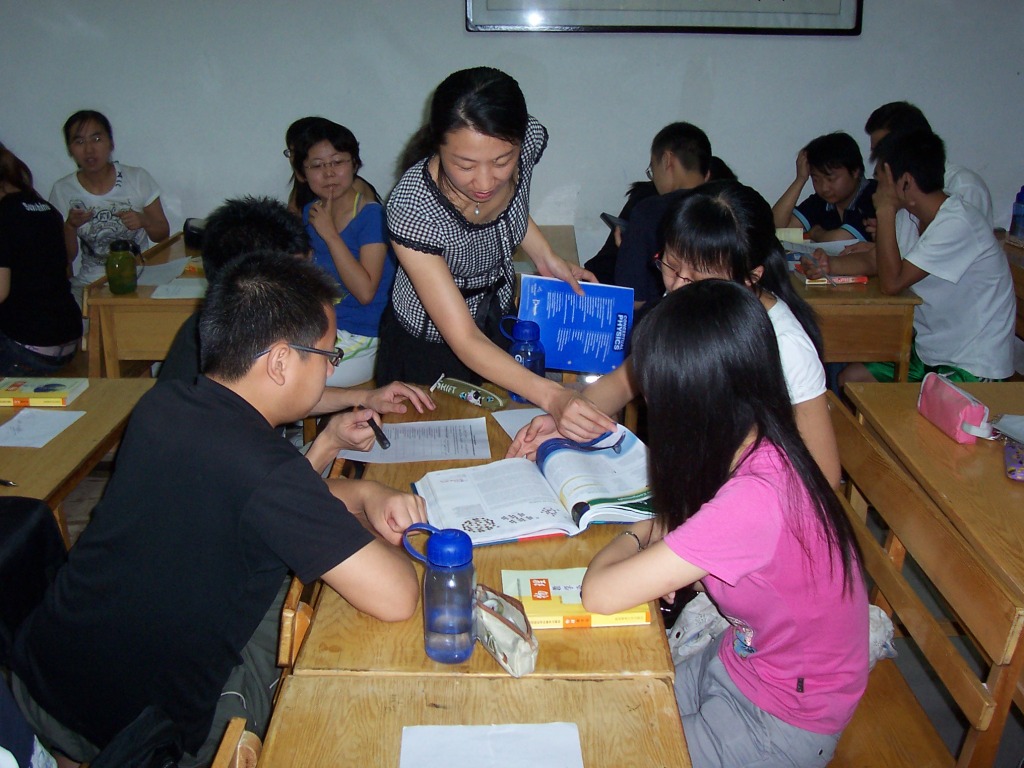
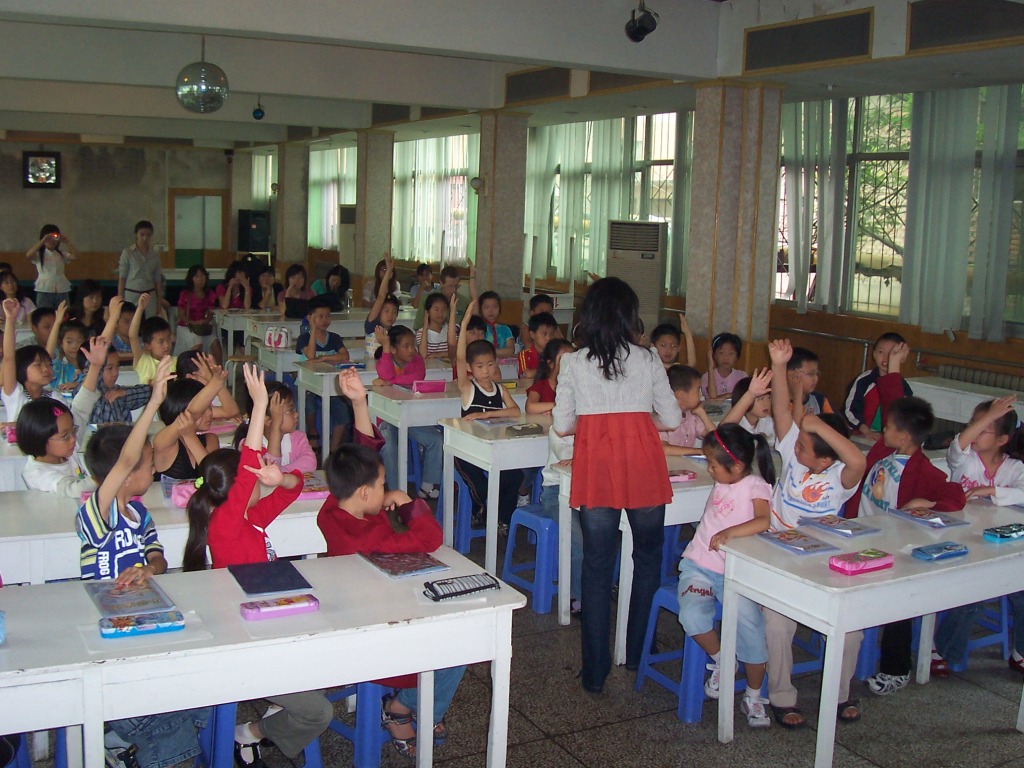
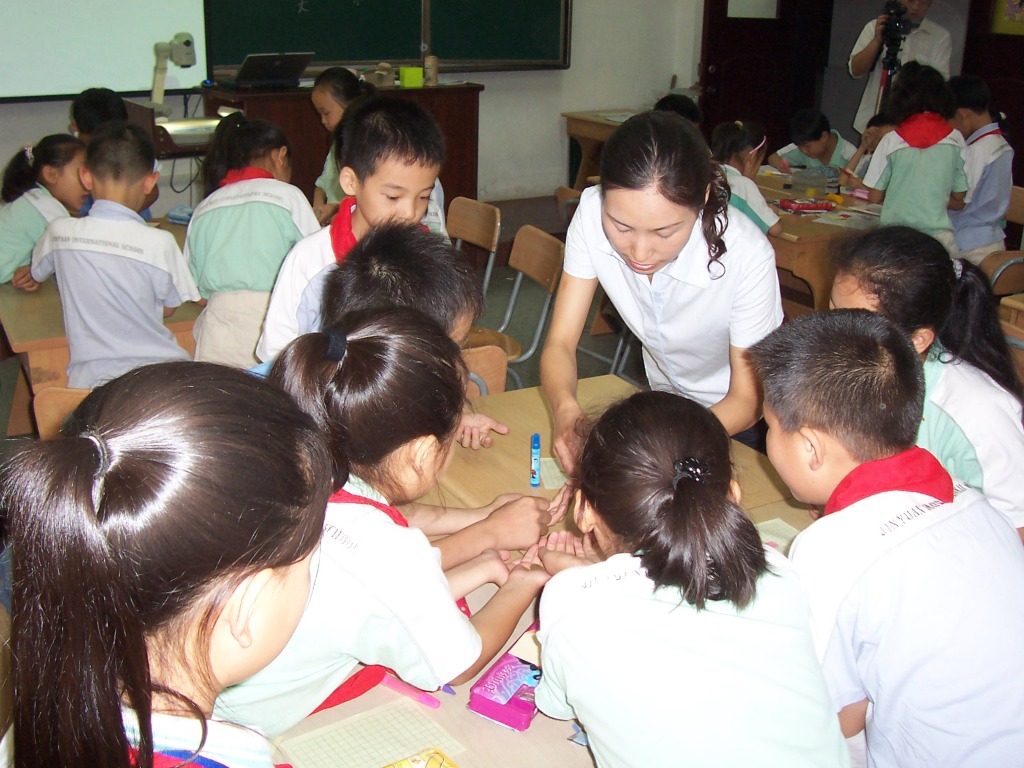
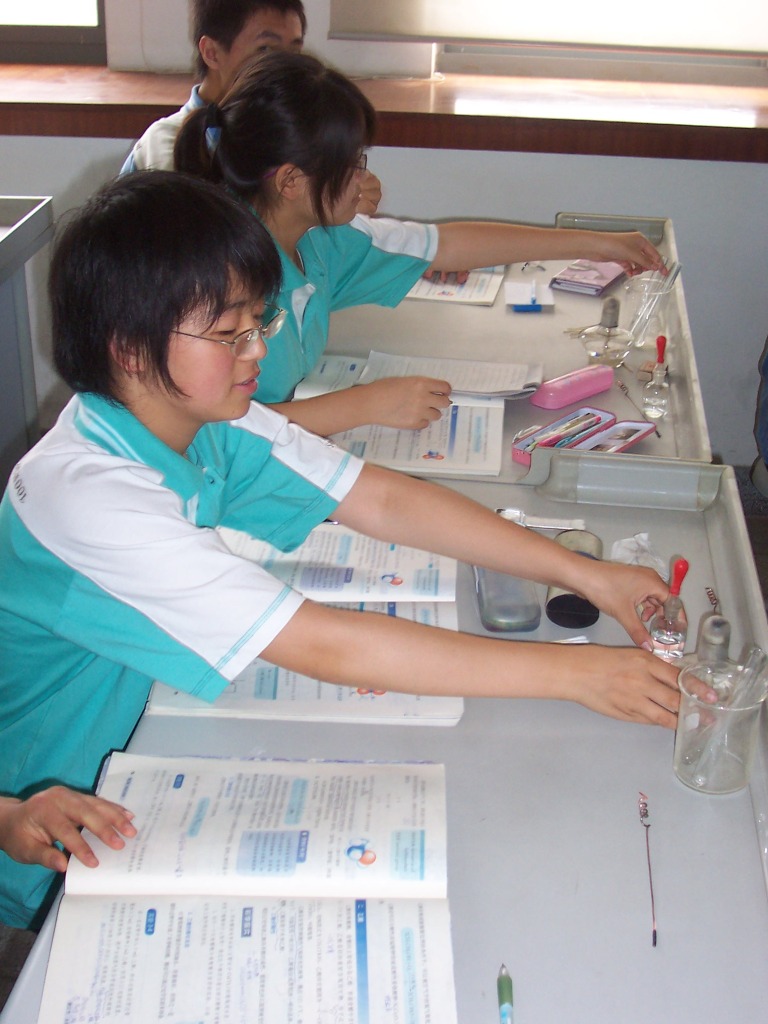
I sense great desire for change in the Chinese teacher education students. They realize that their system does an effective job at transferring a comprehensive and unified curriculum to the unit called "Chinese students". But, they want to be better able to reach the students as individuals. Here is a sampling of questions.

  • How can I generate student interest in a topic that they don't like?
  • How can I motivate a student to learn if he or she does not want to learn?
  • What are some ways to make students interact more in my classroom?
  • How can I manage my classroom if I introduce inquiry-based learning?
  • What changes in the classroom when the students are more active?

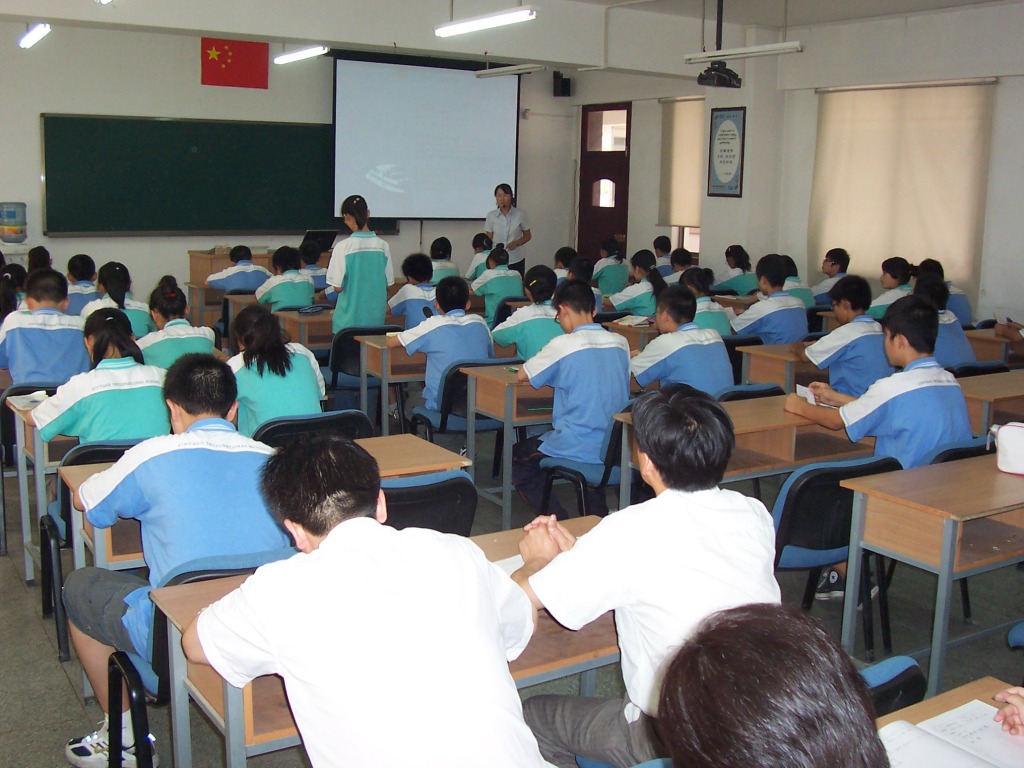
Not a single student has expressed concern that they will cover less content if they introduce inquiry learning. Not a single student has worried that students will not do as well on the standard college entrance exam that all Chinese high school students must take. My sense is that they are so convinced that education reform is the way to go that the testing system will just have to change. This strength of conviction makes it more likely that change will occur. A strong centralized government such as China's has strengths and weaknesses. One weakness is that ill-functioning systems tend to stick around longer than they should. One strength is that once a good idea is in place, it tends to remain in place. There seems to be much government inertia in the existing education system in China. For example, the primary school students do hours of homework each night to get into a good middle school. The middle school students do hours of homework each night to get into a good high school. The high school students do hours of homework each night to get a good score on the college entrance exam. Then, the college graduates who teach prepare their students for the same system. Based on the great questions I heard, I think this generation of new teachers will be the ones to really change the Chinese education system for the better.

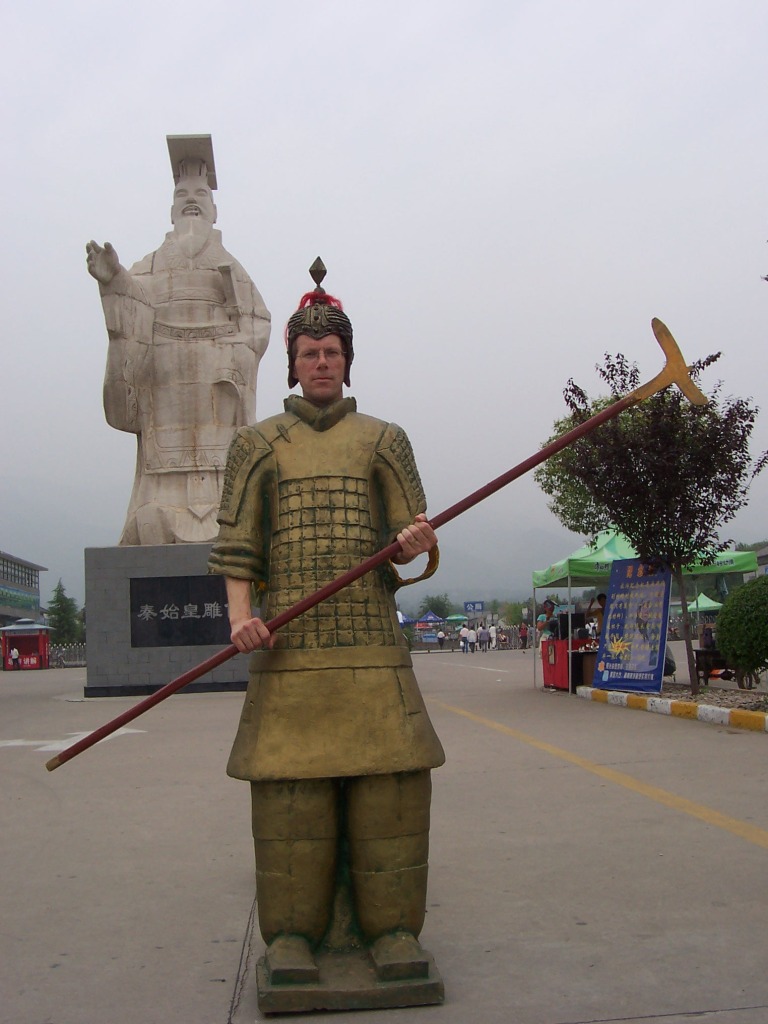
We’re not in America anymore Toto

Two random observations about China so far.

1. Appearances are not as important in China as in the USA. Function is more important than form. This applies to the people and the structures. You don't see people with fancy clothes, expensive shoes, etc. trying to look like the people they see on TV. It is typically pants, a plain shirt and basic shoes. I don't think this is an income issue. Plenty of my own American university students don't have much money but they are more into fashion because that seems to be the way things are in America. As for the buildings, many of them look much more run down than a similar function building in America. The two dorms that my university is tearing down because they are "old" and "worn out" look better than most of the faculty and student housing I have seen here. That is, of course, because the housing is still functional so why take it down.

2. Businesses have significantly more employees than similar places in America. Admittedly, this observation is based primarily on two places. We'll see if it generalizes. I had dinner at the campus restaurant near where I am staying. There was always a waitress within a few feet of our table, sometimes two or three. And, the local superstore, a store similar to Wal Mart called Vanguard, has employees all over the place. You are never more than two aisles from an employee.

Standing room only… with a lot of extra sitting

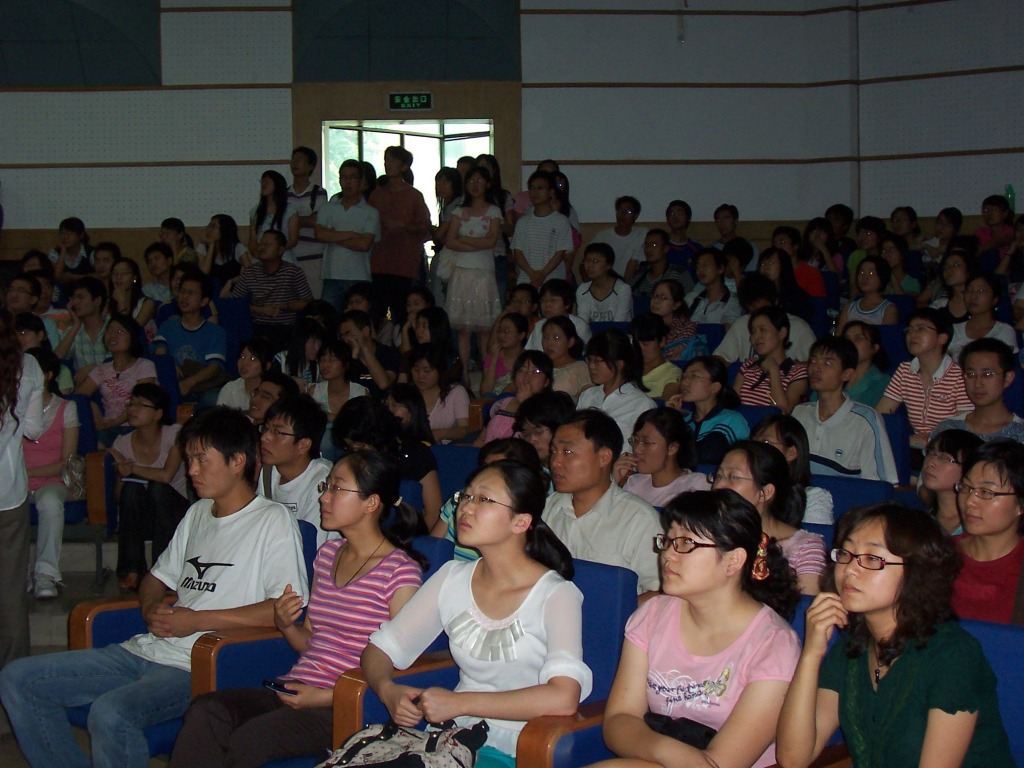
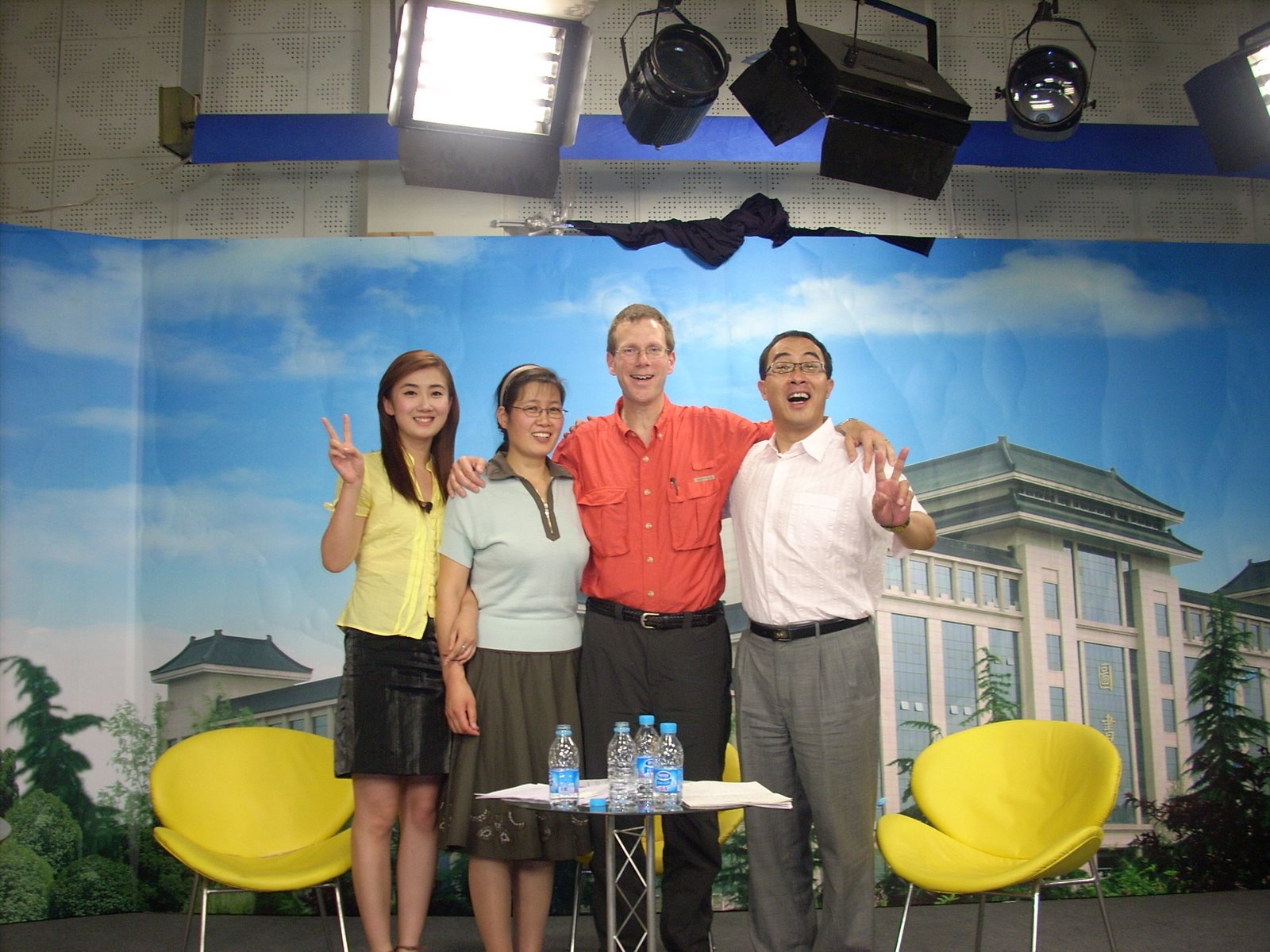
I had no idea how many people would attend my presentations. There were posters up around campus. But, there were in Chinese. Wait…. This is China so that's a good thing. Guian estimated 200 people so he picked the music auditorium. Many people worked hard to help me access the internet, to provide sound so I could play the video clips that accompanied my presentation, and to put up a banner announcing my arrival.

Then the people arrived. And arrived. And arrived. Every seat was full with a few dozen people standing in the back or sitting in the aisles.They were all waiting excitedly for… the projector to stop working. It turns out the projector cable no longer communicated with my computer. Then it did for a few seconds. But, my computer must have dissed the projector cable ("you're just a dumb cable and I was Time magazine's "man" of the year once") because the screen went blank. So, we quickly switched computers with a student worker and I did my presentation from my memory stick. But, that meant showing a slightly older version of my presentation because I made last-minute minor changes. Oh, and the commands on the screen were written in Chinese script. So, I had to remember the buttons by location. Next, the external speaker was of very low quality so the loud voices on the video were distorted and the soft voices could not be heard. My son was probably the most understandable person on the video - and he talked super fast. I forgot a couple of the words in my simple Chinese-language introduction. And, I almost said I started at CWU in 1663 rather than 1993 (9 = jiu, 6=liu).  But, the audience (95% students) clapped when I said I would introduce myself in Chinese. Then they clapped again when I greeted them with "Nimen hao", the version of "hello" for more than one person, rather than "Ni hao", the standard one-on-one greeting. In the end, it didn't matter that I forgot a couple of words. I just joked about it and the audience appreciated the effort. (Too bad I didn't bring some chopsticks to show that skill.)

Despite all this, Guian, my host, liked it. The many students who asked questions and talked to me at the end liked it. That is the important thing. Before the presentation, Guian was tense. After the presentation, he was talking on his cell phone like a middle schooler.

If China becomes a country molded by people like the future teachers I talked to afterwards, China will be a better place (and the USA will be in even more trouble of losing its role as the world leader). These young people want to change education. And they are looking for ideas on how to change it. I gave them some ideas that I thought were very basic. Some of the students very sincerely said, "I have never thought about that." I offered them my business card figuring only two or three would ask for one.  I distributed more business cards today to SNNU students that I have in 15 years at CWU to everyone else put together (except the free lunch drawings).

Thursday, June 19, 2008

No way! Wei!

Before I left for China, I bought a Lonely Planet guide to China from the mid-1990s. The guide said, half seriously and half tongue-in-cheek, that the most commonly heard phrase in China is "mei you", "don't have". As in, "Do you have this in a different size?" "Mei you".

By far, the most commonly heard phrase now is "Wei", the word for "hello" on the phone. Everyone has a cell phone and everywhere you walk you hear "Wei?", "wei?", "WEI!?".

Wednesday, June 18, 2008

Malasong Changpao

My first official day in China (6-16-2008) started off with Guian Li, my host, introducing me to his colleagues in a formal meeting. Guian worked very hard to organize my trip and wanted to get off to a good start. So, he introduced me with a very detailed PowerPoint presentation. To paraphrase Cher from the song "Dark Lady", he told me more about me than I know myself. He talked about and included a picture that would become a recurring theme in future introductions – my participation in marathons. Marathon is "malasong changpao". Ma-la-song is the word "marathon" phonetically converted to pinyin, the phonetic system of the Chinese language developed in the 1950s. Changpao means "long run". The introduction theme was especially appropriate on day 1 because it was a marathon, in duration and in unexpected challenges. After the introduction, we had lunch. I will not bore you throughout this blog with descriptions of mundane events. That would be like the first time I tied my shoes. Back then I took one string in my left hand and one in my right. Then I looped the left string over the right. Not one time but two. Next, I tucked…. Oh, sorry. Back to the subject of lunch. It seems that two things impress my hosts as much as my knowledge of American education system: my ability to use chopsticks (thanks LKG) and my knowledge of a few Chinese words and phrases.

Tuesday, June 17, 2008

She-ah She-ah

Xiexie: the first Chinese word I "learned". I pronounced it she-ah she-ah and said it to someone after they provided me with something. But, on the airplane ride from Seattle to Beijing on 6/13/2008, the flight attendants pronounced it hsyeh-hsyeh. Not only that, they said it at the beginning of their announcements as well as the end. It turns out I didn't learn it at all. Would this be a metaphor for my trip? Would everything I learned about China from my brief study and the natural osmosis of the popular press be wrong? Would my assumptions about Chinese teachers, Chinese students, Chinese schools, and, yes, Chinese food, be wrong. Only time will tell. So far, I was wrong about my assumptions of the Chinese customs process. It was very fast easy. Probably my honest face did the trick. The people in the Beijing airport terminal were helpful. The Chinese ban all liquids from carry-on baggage on domestic flights so I was forced to check my carry-on bag, buy all new toiletries or smell bad the whole trip. My worries about having very minimal language skills were unfounded as all announcements on the flight from Beijing to Xi'an were in English and Chinese. (This despite the fact that Chinese outnumbered non-Chinese about 100 to 5 on my flight.) So far, some of my initial assumptions were shown to be false and some true. Just like my knowledge of xiexie. It is still appropriate for me to say "xiexie" to you for reading this post. As long as I pronounce it "hsyeh-hsyeh". And, as long as I tell you it means "thank you".